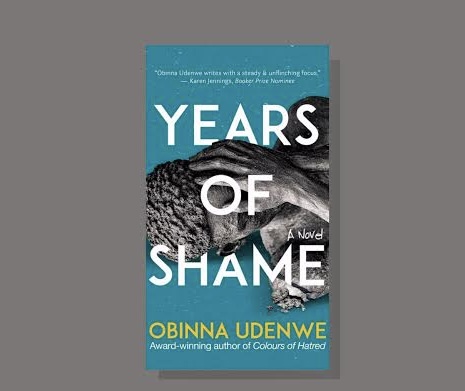
Obinna Udenwe set out to give Abakaliki history and tradition a place in contemporary Nigerian fiction. Years of Shame reaches back to the 1969 Izzi revolt, a relatively little-known episode in South-Eastern history, and places the ukpa ji ukpa nwa at the centre of its story. The novel takes its time with the oath. We see the warnings, the negotiations and the rituals that surround it. Udenwe is at his best here; he knows that the power of the oath lies not simply in its supernatural consequences but in the communal authority behind it.
That cultural grounding gives the novel much of its distinction. The Abakaliki world is present in its speech, customs, prejudices and music. The transliteration is particularly effective, and the Igbo expressions and proverbs often give the prose a rhythm that its more conventional passages lack. For a writer trying to bring an underrepresented history and culture into Nigerian fiction, this is a worthwhile pursuit.
But the trouble begins when Years of Shame has to turn that material into a sustained novel.
Patrice Ikebe, an Ogada man, accuses his neighbour Methuselah Enigwe of stealing his money. Rather than accept the warnings of those around him, Patrice insists on taking the ukpa ji ukpa nwa. He proceeds despite the danger. The oath sets in motion the tragedy that follows, and Udenwe uses Patrice's stubbornness to examine pride, consequence and the danger of refusing the wisdom of one's elders.
The premise is strong. The execution is less so.
Patrice's downfall sometimes feels arranged rather than lived. His movement from relative prosperity to poverty, for instance, is not developed with enough care. A man who owns substantial farmland eventually finds himself working as a labourer for his former master. The humiliation is obvious, but the transition itself needs more attention. Too often, Years of Shame is interested in the next stage of Patrice's suffering without spending enough time making that suffering believable.
The same impatience affects the other characters. Udenwe has a large story to tell, stretching across generations, but many of the people inside it remain surprisingly thin. They are defined by their worst qualities or by the role they have to play in Patrice's story. They scheme. They bully. They behave callously. They are pig-headed. But too few of them develop the contradictions that make characters memorable.
Chief Douglas Akidi is the most obvious example. He is powerful, pompous and contemptuous of Abakaliki people, and his position gives him considerable importance in the novel's historical conflict. But Udenwe keeps adding to his catalogue of depravity until Douglas begins to resemble a villain from a Nollytube script. He is a womaniser, rapist and paedophile in addition to everything else. None of this makes him more interesting. It simply makes him more monstrous.
What would have been more useful is a fuller sense of the man behind the power. Why does Douglas behave as he does? What does his position mean to him? What has produced his particular form of cruelty? The novel is more interested in telling us that he is terrible than in making us understand the machinery of his terribleness.
Ekwutosi, Douglas's first wife, presents a different problem. Her body receives an extraordinary amount of attention. Her size, her difficulty moving and her isolation are repeatedly emphasised until her physical appearance becomes almost her entire character. There is nothing inherently wrong with describing a fat woman or making her body part of a character's experience. The problem is repetition without development. When immobility, loneliness and physical size are continually made to sit beside one another, the portrayal begins to feel less like characterisation than caricature.
These problems might have been less conspicuous with firmer editing. Udenwe has a tendency to overwrite, and some sentences simply repeat themselves. On page 131, for example, we get: “The office was scented. There was the scent of tobacco as if someone was smoking.” The second sentence adds almost nothing to the first. Such lapses are minor until they begin to accumulate.
The novel also becomes noticeably hurried towards its final stretch. The movement into Chapter Seven is particularly abrupt. After investing so much time in the world and its central conflict, Udenwe suddenly seems anxious to reach the end. Secondary characters who might have been given more room to develop instead recede, and events that could have carried greater emotional force pass quickly.
This is especially unfortunate because Years of Shame is trying to tell a story that demands patience. Patrice's shame is not supposed to end with Patrice. Its consequences move through his family, and the novel eventually extends its concerns to his children and grandson. The idea is larger than one man's punishment. But the emotional consequences are weakened when the people carrying them have not always been given enough space to become fully realised.
The historical sections are considerably more assured. Udenwe's treatment of the Izzi revolt gives the novel a reason for existing beyond its central tragedy. He is recovering a history and placing it before readers who may never have encountered it. Even when the historical discussions become too long, there is something valuable in the effort. The novel is at its most alive when it allows this history, its language and its traditions to take over.
The music is less successfully integrated. Udenwe references Schubert, Frank Sinatra, Nelly Furtado, Celestine Ukwu and more than ten other songs and artists. Some references establish time and taste, but others feel incidental. Douglas's extended music discussion with Irene is particularly difficult to justify because it neither advances the story nor reveals enough about either character to warrant the space it occupies. The songs sometimes feel like things the characters happen to know rather than elements the novel has deliberately made meaningful.
That matters because Years of Shame occasionally mistakes accumulation for depth. More historical information does not necessarily make the history more vivid. More descriptions do not necessarily make a character fuller. More references to music do not necessarily create atmosphere. The novel needed to decide which details mattered most and give those details greater weight.
Still, there is plenty here worth defending. Udenwe's attention to Abakaliki culture is not cosmetic. The ukpa ji ukpa nwa material is fascinating, and the novel's use of Igbo language and traditional thought gives it a character that many contemporary Nigerian novels lack. His recovery of the Izzi revolt is also important. He is writing into a gap, and Years of Shame makes a serious attempt to fill it.
The problem is that the ambition of the subject is often greater than the discipline of the fiction.
Udenwe has improved from Satans and Shaitans, but Years of Shame still needed a more demanding editorial hand. Its best passages suggest a novelist who knows exactly what he wants to preserve: the history, the language, the rituals and the memory of a people. Its weaker passages suggest a novelist too eager to get his characters to their appointed disasters.
The result is a novel with a worthwhile story and a valuable cultural purpose, but one that too often rushes, overstates and simplifies. Udenwe has opened an important door but he has not yet fully built the room behind it.
 WhatsApp
 X
X
 Facebook
 LinkedIn