When people talk about the languages of artificial intelligence, the conversation usually starts with English.
That is not because English is the language most people speak. It is because English has been disproportionately represented in the text, speech and other data used to train modern AI systems.
For many African languages, the problem begins much earlier. There may be too little digitised text, too few transcribed conversations, inadequate speech datasets and almost no reliable benchmarks for measuring whether a model actually understands what it is being asked.
The result is an uncomfortable contradiction. AI systems are becoming increasingly capable of reasoning, translating, generating images and processing speech, while large numbers of Africans still have to move into a better-resourced language before they can reliably use those systems.
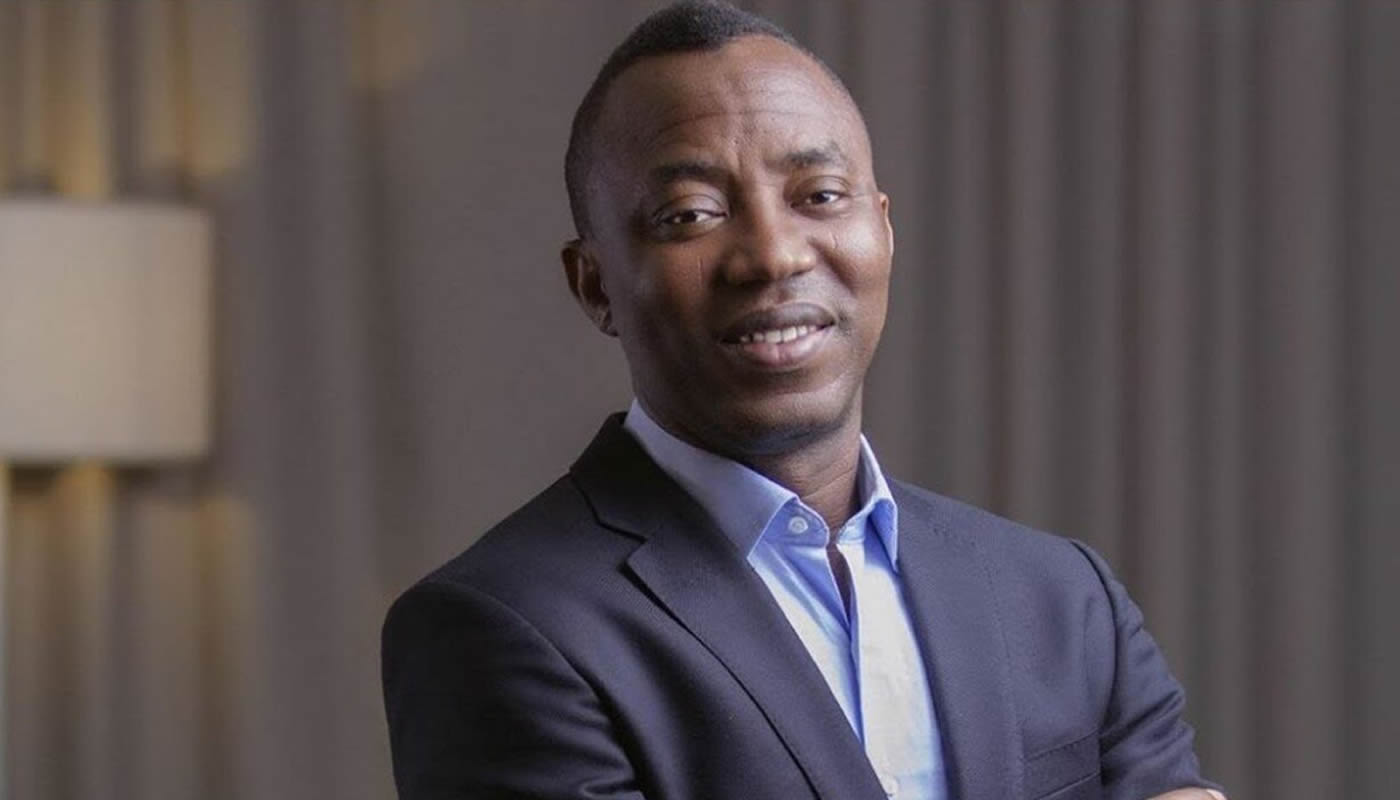
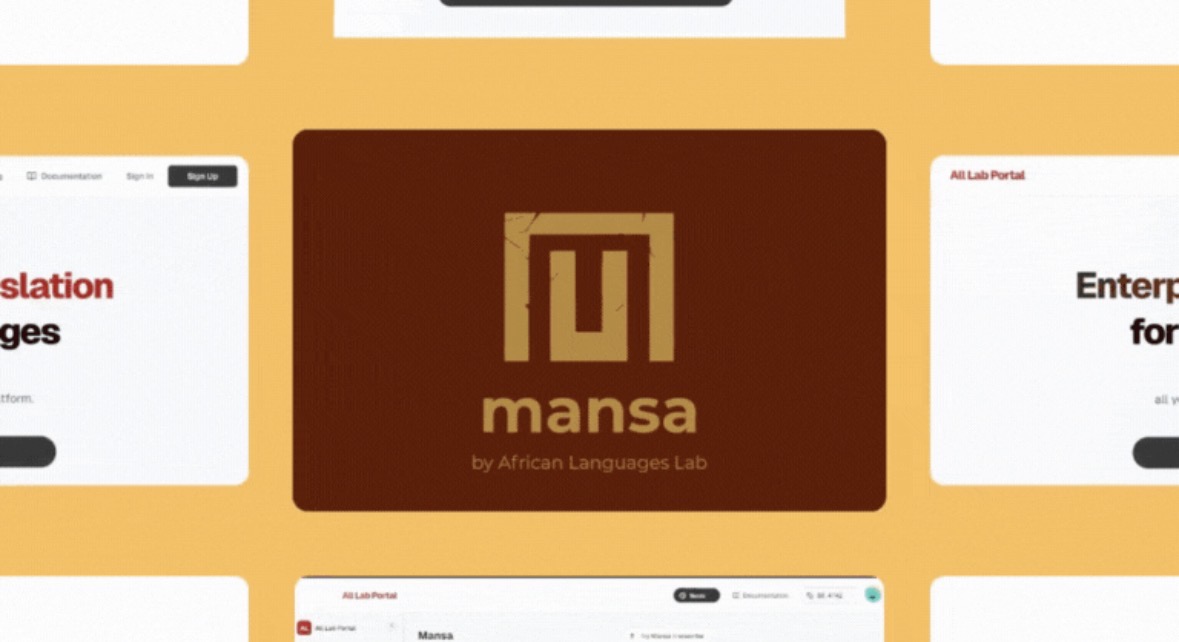
African Languages Lab, a Nigerian company founded by Sheriff Issaka in 2020, is trying to close part of that gap. The company launched Mansa this week, a multilingual and multimodal AI platform that it says currently supports about 30 African languages in production. It is available through the web and mobile applications, with APIs for developers. But the more consequential part of the company's work may not be Mansa itself. It is the data infrastructure being assembled underneath it.
The data problem
Africa is home to more than 2,000 languages, but Issaka estimates that fewer than 5 per cent have meaningful natural-language-processing resources, that scarcity has practical consequences.
A language can be widely spoken and still be almost invisible to an AI system. There may be little written material available in digital form, limited speech data and insufficient examples of how people actually use the language in conversation.
Even when a model technically supports an African language, that does not necessarily mean it understands it well. Issaka argues that many existing systems struggle with ordinary conversations in African languages. The problem becomes more apparent when users move beyond simple translation and begin asking questions, giving instructions or switching between languages.
There are also economic consequences, AI systems break text into tokens before processing it. Languages that require more tokens to represent the same meaning can make interactions more expensive and, depending on the model, less efficient.
Chioma Agwuedo of TechHerNG has said Yoruba text can require roughly four times as many tokens as English in some systems, that difference is easy to overlook when AI products are evaluated primarily through English-language benchmarks. For users working in lower-resource languages, however, the language itself can become a technical and economic disadvantage.
Building what the models are missing
African Languages Lab says it has spent years assembling what it describes as one of the largest collections of African-language data, covering more than 70 languages.
Its datasets contain more than 100 billion curated tokens and over 19,000 hours of speech that the company says have been validated by language experts. The collection has come from several sources, including open and licensed datasets, community-based work and paid data collection and validation.
The company also operates All Voices, a platform through which speakers contribute language data directly. One of its stated aims is to collect African-language material without always passing through English or another high-resource language as an intermediary, that distinction matters.
A system trained primarily by translating from English into an African language may learn something about how the language corresponds to English without necessarily learning how speakers use it on its own terms. Directly collected data cannot solve every problem, but it can provide models with examples of language as it is actually spoken and written.
It also creates another set of questions; who owns the data? Who has consented to its use? How are contributors compensated? And who ultimately captures the value created when their language becomes training material for a commercial AI system?
African Languages Lab says contributors are informed about how their data will be used and can opt out. Some projects involve direct payment for collection, while other arrangements are tied to the performance of models built from the data. Those mechanisms address some of the concerns around data collection. They do not eliminate the larger question of whether communities whose languages supply AI systems will have a meaningful stake in the value those systems create. That question is likely to become more important as demand for African-language AI grows.
Thirty languages, not seventy
The gap between the number of languages African Languages Lab has collected data for and the number it has put into production is revealing. The company says it has data covering more than 70 languages, but Mansa currently supports roughly 30 in production.
The remaining languages, Issaka says, do not yet have enough data, support or model performance to meet the company's standards; that is an important qualification.
It is tempting to measure progress by counting languages. But adding a language to an AI product is not the same as making the system genuinely useful in that language. A model that can translate a handful of sentences but consistently misunderstands context, names, idioms or culturally specific expressions has technically added another language without necessarily solving the user's problem. For African-language AI, therefore, the more useful question is not how many languages a company can list. It is how well its systems perform in each one.
The safety problem
Language coverage also has consequences beyond convenience. Issaka says the company has found that harmful prompts written in some African languages are at least 10 times more likely to produce erroneous responses that would ordinarily be blocked in higher-resource languages.
If that finding holds across independent testing, it would point to a significant weakness in the safety architecture of multilingual AI: a safety system that works well in English but performs poorly in Igbo, Hausa or another lower-resource language does not provide equal protection to its users.
This is one of the less visible consequences of the data imbalance. The problem is not simply that an AI model may struggle to answer a question. It may also struggle to recognise when a question is dangerous, abusive or disallowed. That makes language representation a safety issue as much as an accessibility issue.
Mansa is not the whole story
Mansa brings together several functions users have come to expect from modern AI platforms. The system supports text and voice, alongside image and video capabilities, and offers translation, transcription, text-to-speech and real-time interpretation. Its AI agent can also perform tasks such as summarising emails, searching research material and tracking news and social trends.
But the platform's underlying model is not entirely built from scratch. African Languages Lab says Mansa's foundation model is adapted from a model developed by Chinese AI company MiniMax. The company's philosophy, Issaka says, is to reuse existing technology where possible rather than rebuild everything itself.
That approach is hardly unusual. Building a large foundation model from scratch requires enormous amounts of computing infrastructure, data and capital. For a company whose more distinctive problem is language representation, adapting an existing model can allow more resources to be directed towards data, evaluation and language-specific performance.
African Languages Lab does train some models and components itself, but Mansa's flagship model is an adaptation. That distinction matters because the company's contribution is not necessarily a new foundation model. It is the attempt to build a layer of African-language data, evaluation and tooling that existing AI infrastructure has largely lacked.
Speech may be harder
Text is only part of the problem. Speech recognition introduces another layer of difficulty because accents, pronunciation, code-switching, background noise and differences between formal and everyday speech all affect performance. African Languages Lab says it has collected thousands of hours of speech and continues to work on accent data and annotation.
The challenge is particularly significant in countries such as Nigeria, where speakers routinely move between English, Nigerian Pidgin and indigenous languages within the same conversation. A speech system trained on carefully recorded, standardised language may perform very differently when confronted with an ordinary conversation. This is where the company's decision to collect data directly from speakers could become consequential. The more closely datasets reflect actual speech, the more useful they may become for systems intended for everyday use.
But again, the claim has to be demonstrated through independent testing rather than accepted because a company says its system performs better. African Languages Lab says Mansa outperforms ChatGPT and Google Translate on some African-language translation tasks and that its speech systems are better calibrated for African accents.
Those are potentially significant claims. They are also the kind that require transparent benchmarks and independent evaluation before they can be treated as established facts.
The competition is growing
African Languages Lab is not working in isolation.
Google has expanded AI Search into additional African languages and has released WAXAL, an open-source speech dataset covering 21 sub-Saharan African languages. Nigerian companies including Intron and Spitch are also working on speech technology.
The broader shift is important because the competition is no longer simply about putting an African language into an interface. It is about building the infrastructure that allows machines to recognise, generate and reason with those languages reliably.
That infrastructure includes datasets, speech corpora, translation systems, evaluation benchmarks and safety tools, whoever builds those layers may have influence beyond a single consumer AI product. Issaka's ambition extends considerably beyond Mansa's current reach.
The company wants to move from 30 production languages to 70, then 200 and eventually 1,000. The scale of that ambition is also a reminder of how far the industry still has to go. Adding languages is not a simple matter of collecting enough sentences and connecting them to a model. Each language brings questions about orthography, dialects, speech patterns, cultural context, data availability and evaluation.
The success of Mansa, then, will not ultimately be determined by the size of its language list. The more meaningful test is whether people can use these systems without having to simplify the way they speak, switch to English when the model gets confused or accept noticeably poorer performance because their language has historically received less attention from the technology industry.
That is a much harder problem than launching another AI assistant. And it cannot be solved by a model alone. The infrastructure required to make AI work across Africa's languages—data, benchmarks, speech resources, safety systems and the mechanisms for fairly collecting and governing that data—may prove to be the more important technology.
Mansa is an attempt to build some of it. Whether it can do so at scale, while producing systems that are demonstrably better rather than simply more widely available, remains the question.
 WhatsApp
 X
X
 Facebook
 LinkedIn