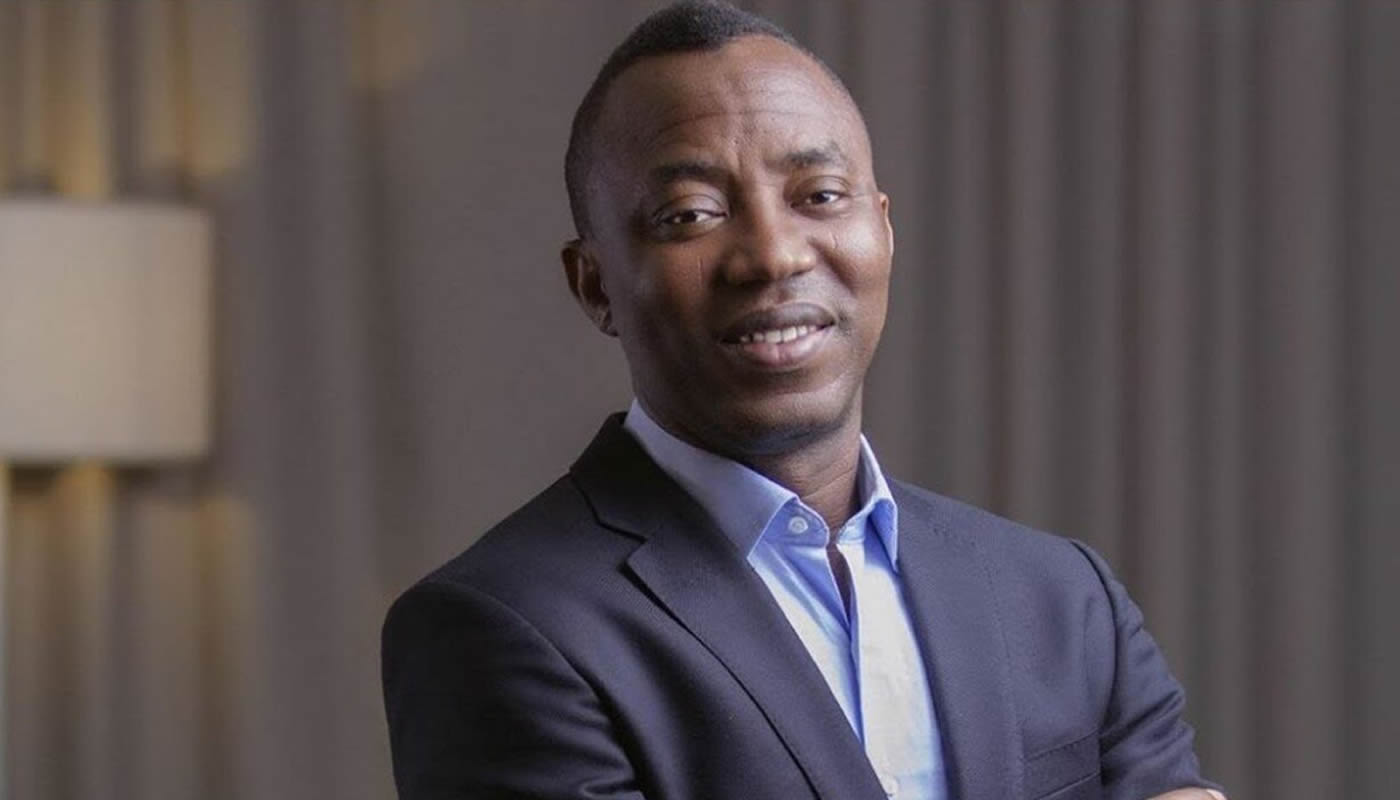
Omoyele Sowore wants Nigerians to know exactly where he stands on wages. In an interview with Independent newspaper laying out his 2027 agenda, the African Action Congress presidential candidate pledged a ₦500,000 monthly "living minimum wage," alongside promises of 24-hour electricity, free education, one million public homes, and reformed tenancy laws. "We are proposing a ₦500,000 monthly living minimum wage because Nigerian workers cannot continue receiving starvation wages while senators, governors and political appointees consume millions every month," he said.
It is a number designed to be repeated. It is also a number that, on its own, answers almost none of the questions a president would need to answer before it became policy.
Nigeria's current statutory minimum wage is ₦70,000, itself only fourteen months old, signed into law by President Bola Tinubu in July 2024 after a bruising standoff with organised labour that included a national strike and a shutdown of the power grid. Sowore is proposing more than seven times that figure. What follows is an attempt to interrogate the promise the way a reporter would put it to the candidate directly: what does it mean, who pays for it, and has he shown the arithmetic.
The number isn't as original as it sounds
Sowore did not invent ₦500,000. In September 2024, weeks after the ₦70,000 law took effect, the Nigeria Labour Congress and Trade Union Congress were already telling a workers' rights summit in Kebbi State that they intended to reopen negotiations and demand ₦500,000 as the next minimum wage. During the 2024 negotiations themselves, the unions had opened even higher, at ₦615,000, before eventually settling for ₦70,000. The government's own opening offer, for comparison, was ₦48,000, rising through ₦54,000, ₦57,000, ₦60,000 and ₦62,000 before it agreed to ₦70,000.
So the honest starting point is this: ₦500,000 is not a fringe or eccentric figure invented for a campaign trail. It is a number organised labour itself has floated. That should raise Sowore's credibility on the politics of the number, since workers clearly feel underpaid, but it does not answer the harder question of whether the number is fundable, and neither Sowore nor the unions who first floated it have published a costed methodology for how they arrived at it.
What ₦500,000 actually is in real terms
At the naira's official exchange rate in early September 2026, roughly ₦1,321 to the dollar, ₦500,000 converts to about $378 a month, or roughly $4,540 a year. The outgoing ₦70,000 wage, by the same math, is worth about $53 a month. Both figures are worth stating plainly because the naira's volatility is precisely what makes any nominal wage promise fragile: the ₦30,000 minimum wage set in 2019 was worth far more in dollar terms at the time than it was by the time it was replaced in 2024, because of currency depreciation in between. A president elected in 2027 who fixes ₦500,000 as a legal floor is not fixing its real value; inflation and exchange-rate movements can erode it long before the next mandated review, currently set at three years under the 2024 law.
That is the first question Sowore has not answered: is ₦500,000 meant to be re-indexed to inflation or the exchange rate, or is it a fixed nominal figure that will need renegotiating again in a few years, the way ₦70,000 already is?
The government's own payroll math
When the ₦70,000 wage took effect, the Nigerian government said it would cost the federal payroll about ₦4.019 trillion a year, or roughly ₦334.9 billion a month, covering more than 1.2 million civil servants. A ₦500,000 floor, a roughly sevenfold increase over ₦70,000, would not scale to ₦4.019 trillion times seven in practice, because not every federal worker is paid exactly at the minimum. But the direction of the number is unambiguous: it would run into the tens of trillions of naira annually for the federal payroll alone, before a single state government's wage bill or a single private employer's costs are counted.
Sowore has not published a projected cost for his own government's wage bill under ₦500,000, nor said which spending he would cut, which taxes he would raise, or which borrowing he would take on to cover it.
The uneven history of enforcing the current law
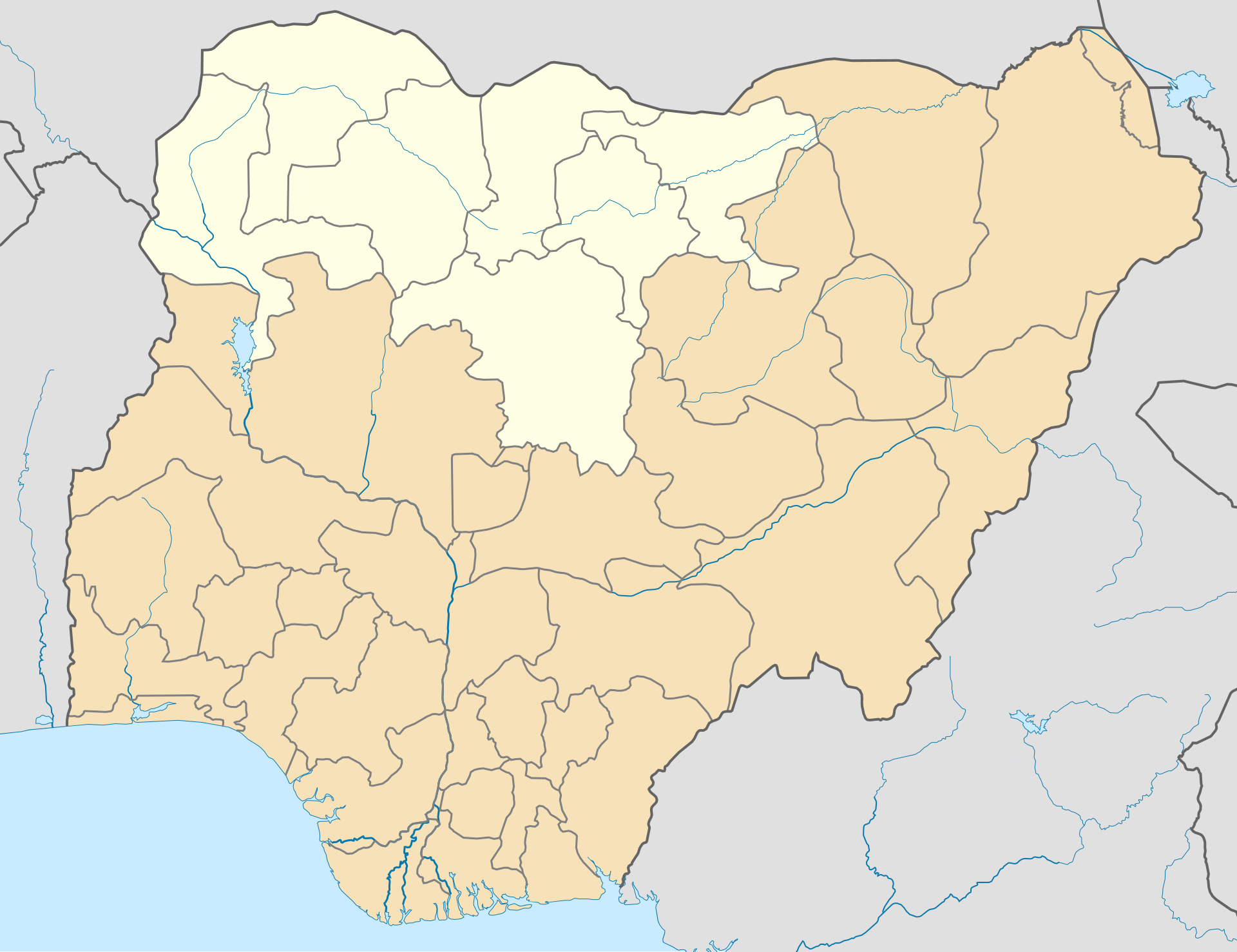
Even ₦70,000 has not been evenly implemented. Three months after the law took effect, only nine of Nigeria's 36 states had agreed to pay ₦70,000 or more, Rivers State led at ₦85,000, followed by Bayelsa, Niger and Akwa Ibom at ₦80,000, while sixteen states had not yet concluded negotiations with their own workers at all. That is the compliance record for a wage increase organised labour, the federal government and the private sector's own umbrella body, the Nigeria Employers' Consultative Association, had all publicly endorsed going into the negotiation. NECA had told the NLC's annual assembly it would pay whatever wage was "agreed upon and passed into law" once the process concluded.
If a third of states struggled to implement a ₦70,000 floor within months, Sowore has not said what enforcement mechanism would get all 36 states, plus the informal and private sector, to a floor more than seven times higher, nor what happens to a state that simply cannot pay it.
The part of the economy the promise doesn't reach
The National Bureau of Statistics recorded informal employment, jobs with no registered employer, no wage floor and no tax registration, at 92.7 percent of total employment in the first quarter of 2024. Later NBS surveys through 2024 put the informality rate in rural areas as high as 97.5 percent and in urban areas around 90 percent, with self-employment (running a business or trading on one's own account, rather than working for a wage) also higher in rural areas than urban ones. A national minimum wage law, whatever figure it sets, has no direct legal reach into this part of the economy: the trader, the mechanic, the roadside food seller and the subsistence farmer do not have an employer to send a payslip.
That means a ₦500,000 minimum wage, if implemented exactly as written, would set a legal floor for a minority of Nigerian workers, federal and state employees, and private-sector employees at registered firms, while leaving the incomes of the large majority of the workforce untouched by the policy itself. Sowore's platform, as reported, includes broader plans on industrialisation, agriculture and job creation that could in principle raise informal incomes indirectly. But he has not connected those plans explicitly to the wage promise, or explained how a worker outside formal employment benefits from a ₦500,000 floor that legally does not apply to them.
What happens to the person already earning ₦500,000
There is a second-order effect that Nigeria has already lived through once, at a smaller scale. When the ₦70,000 wage was signed into law, the federal government did not simply hand every worker at or below that figure a raise; it had to convene a 16-member committee on "consequential adjustments", negotiated jointly by government and labour, to work out how much workers above the new floor should also be raised, so that a supervisor's salary did not collapse into rough parity with an entry-level worker's. That process delayed some payments for months; one civil servant told a fact-checking outlet the eventual consequential increase amounted to a flat ₦40,000 addition that she considered inadequate, with some arrears still outstanding as late as December 2024.
A ₦500,000 floor would trigger the same compression problem at a much larger scale: every salary structure between ₦500,000 and several million naira would need renegotiating to preserve any incentive for seniority or skill. Sowore has not said whether his government would run a similar consequential-adjustment process, how long it would take, or how it would be funded on top of the base wage-bill increase.
The private-sector question nobody has put to him directly
Nigeria's minimum wage law applies to private employers as well as government ones, subject to exemptions for the smallest businesses. A ₦70,000 floor already tested many small and medium employers' capacity to pay. Reporters covering that rollout noted private-sector concern about enforcement even at that level. Sowore has been asked, in the reporting reviewed for this piece, about electricity, education, housing and tenancy reform. He has not been asked, at least not on the record, what he expects to happen to a ten-employee restaurant, a private school or a small manufacturer whose combined wage bill would multiply several times over under his proposal: whether he expects them to raise prices, cut staff, or close, and what state support, if any, he would offer them through the transition.
What would actually need to be true
None of this proves ₦500,000 is impossible, and it would be wrong to treat the scale of the number alone as disqualifying. Nigeria's minimum wage has historically lagged both inflation and comparable economies, and the argument that workers deserve a larger share of the country's income is a legitimate one to put to voters. But a number this large is not, by itself, a policy. It becomes one only when it is attached to answers on where the money comes from, how it survives currency depreciation, how it reaches the 90-plus percent of workers outside formal employment, how compliance would be enforced across 36 states with a patchy record on the current wage, and what happens to private employers who cannot absorb the cost without cutting jobs.
Sowore has roughly a year before the 2027 election to answer those questions in public. So far, the record shows a promise. It does not yet show the plan behind it.
 WhatsApp
 X
X
 Facebook
 LinkedIn