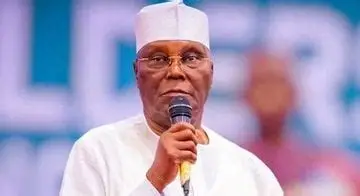
Atiku Abubakar wants Nigerians to know he has not forgotten what fuel subsidy did to the last decade of Nigerian budgets. The African Democratic Congress candidate has spent the past month explaining, revising and re-explaining a pledge to bring subsidy back for the 2027 election, insisting at every turn that his version is nothing like the one Nigeria spent 2012 to 2023 trying to escape. "We are restoring subsidy, but moving it from importation to production," he wrote in a press release on September 11, 2026. "The subsidy follows the barrel refined in Nigeria."
It is a promise built almost entirely around a distinction: not that old subsidy, this one. Whether that distinction survives contact with implementation is the question worth putting to him directly.
Before Atiku settled on his current framing, his spokesperson had already said something different in public. Paul Ibe, his senior aide, told AIT that the proposed subsidy would be temporary and phased out once the economy recovered. Atiku then went on to say the opposite: that he would simply "restore targeted subsidies," full stop, with no phase-out mentioned. His campaign later settled on calling it "targeted, capped, budgeted, time-bound and independently audited," a description that tries to hold both positions at once: time-bound, but also apparently a standing feature of an Atiku government's energy policy. That is not a small inconsistency. Nigerians who lived through a decade of subsidy debates know that "temporary" interventions in this sector have a habit of becoming permanent fixtures of the federal budget. If Atiku wants credit for designing something different, the first thing he owes voters is an answer to a simple question: is this subsidy meant to end, and if so, on what date or under what condition, or is "time-bound" itself part of the messaging rather than the policy?

The most detailed version of the policy did not appear as a standalone white paper. It appeared as a rebuttal, after Dangote Refinery's initial public offering prospectus warned that any reintroduction of fuel subsidies or price controls could affect refining margins. The Presidency seized on that warning to accuse Atiku of a policy that "portends a reversal of current local production" and could bankrupt smaller refiners, according to a statement from presidential aide Bayo Onanuga. Atiku's campaign responded that Dangote's concern was "legitimate" but that the Presidency had "turned it into a campaign of fear," and that his proposal was never meant to force any refinery, Dangote's included, to sell below cost. That exchange clarifies what the policy is not. It does not yet clarify what it is, in the way a market needs to see before pricing risk around it. Nigeria's largest private refiner, whose warning triggered this entire public debate, still does not appear to have received a document from the Atiku campaign spelling out the mechanism in enough detail to withdraw its concern. Neither has the public.
Atiku's team has been careful to say this proposal would prevent "arbitrage" and track crude "from allocation through refining and distribution, using technology to prevent diversion," according to his aide Phrank Shaibu. That promise exists because the previous regime failed at exactly that task, and failed at a scale worth restating plainly: a 2012 parliamentary probe found fraudulent subsidy claims had cost Nigeria an estimated $6.8 billion over three years, through practices a former EFCC chairman later catalogued in detail as ghost importing, over-invoicing, forged shipping documents and round-tripping, where a single cargo was used to claim multiple subsidy payments. Government auditors at the time found 25 companies alone had collected ₦61.33 billion for fuel that was never delivered. "Verifiable barrels" is therefore not a vague aspiration in this context. It is a promise to solve a specific, well-documented fraud problem that Nigerian institutions did not solve for over a decade under the old import-subsidy model. Atiku has not named the technology, the agency responsible for verification, or the independent auditor his plan refers to. Given the fraud history his own framing is implicitly responding to, that is the level of detail the promise needs before "independently audited" means anything more than a phrase in a press statement.
The most awkward question for the proposal may be the one about timing. Since Tinubu removed the subsidy in 2023, the Presidency has said Nigeria now saves roughly $7.5 billion a year, while the World Bank had projected savings reaching over ₦11 trillion by the end of 2025. In that same period, the Dangote refinery, built specifically to end Nigeria's reliance on imported fuel, reached its full 650,000 barrels-per-day capacity and now supplies the large majority of the petrol Nigerians consume, with imports falling to a nine-year low. Competition between Dangote and importers has already been pushing ex-depot prices down without a government subsidy attached, with Dangote's own ex-depot petrol price falling to about $0.50 a litre in February 2026, down from higher levels the year before. That raises a question Atiku has not addressed head-on: if domestic refining capacity is already at effectively 100 percent of national demand and prices have already been falling through market competition, what specific market failure is the production subsidy meant to correct? Is it that Dangote and other refiners are not passing enough of their cost advantage on to consumers, that crude feedstock costs remain too high even for a refiner at full capacity, or something else? The "cheaper rice at home" analogy Atiku has used explains the intuition behind the policy. It does not explain what, concretely, is broken today that ₦0 in subsidy has not already started fixing.
Atiku has said the subsidy would be capped, budgeted, targeted and time-bound. He has not put a number on any of those adjectives: what the cap would be, what the annual budget line would look like, which refineries would qualify beyond Dangote and the state-owned NNPC refineries, and what "time-bound" means in months or years rather than as a description. He has said an independent committee would determine the appropriate discounted crude price for refiners, without saying who sits on that committee or how its independence from the office that appoints it would be secured. He has said the plan would prevent refiners from pocketing the subsidy without passing benefits to consumers, without saying what the enforcement mechanism is if a refiner does exactly that.
None of this means the underlying instinct, that Nigeria's refining sector could still use targeted government support to bring pump prices down further, is wrong on its face. But a candidate proposing to reintroduce a policy tool that cost the country billions of dollars in verified fraud, in a sector where the country's newest instrument for avoiding exactly that problem (deregulation plus domestic refining capacity) is already producing measurable savings, owes voters more than an assurance that this time will be different. He owes them the mechanism.
 WhatsApp
 X
X
 Facebook
 LinkedIn