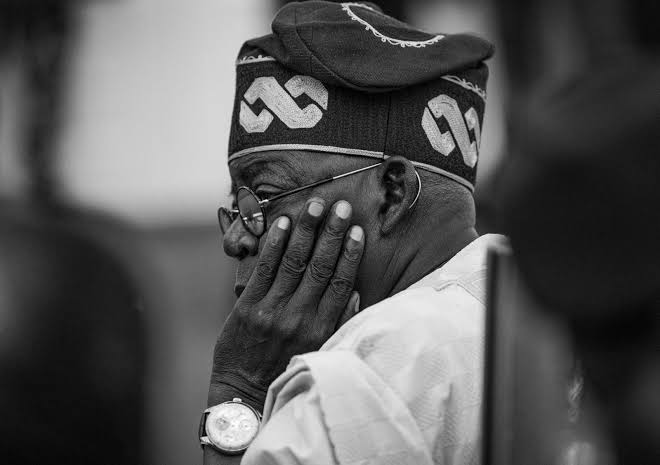
Bola Tinubu is asking Nigerians to re-elect him in 2027 on the strength of a first term whose most quoted line was, until recently, a promise to disqualify himself. At a business luncheon in Lagos during the 2023 campaign, candidate Tinubu told the room that if he failed to deliver on electricity, voters should not return him for a second term, a pledge that has since been clipped, repeated and weaponised so many times that the version circulating in public life now bears only a loose resemblance to what a fuller transcript shows he actually said.
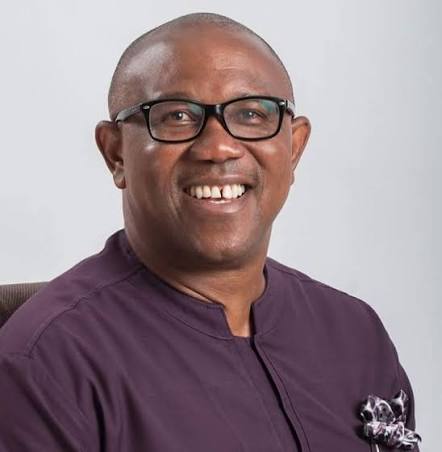
The shorthand, repeated by opposition figures at every opportunity, is blunt: "If I don't give you electricity, don't vote for me." The African Democratic Congress has used almost exactly that phrasing to remind the president of his own words, and Peter Obi has quoted him similarly, telling audiences the president said he would not seek a second term "if I do not provide steady electricity in my first four years." Neither version mentions any conditions. Both treat the promise as absolute.
It was not. According to Special Adviser on Information and Strategy Bayo Onanuga, who released what he described as the full quote in mid-2026 after Obi renewed calls for Tinubu to resign, the actual remarks were: "Whichever way, by all means necessary, you will have electricity, and you will not pay for estimated bills anymore. A promise made will be a promise kept. If I don't keep the promise and I come for a second term, don't vote for me, unless I give you adequate reasons why I couldn't deliver." That last clause does not survive contact with a campaign rally, or with a tweet. It has been dropped so consistently from the public version of the quote that most Nigerians repeating it back to the president probably do not know it exists. Whether that is opposition editing for effect or simply what happens to any sentence long enough to outlive a viral clip, it is doing real work: a flat disqualification and a disqualification with a built in excuse clause are not the same commitment, and only one of them is what Tinubu appears to have actually said.
Onanuga went further in a later interview with Arise News, arguing that Tinubu "never categorically stated that he would abandon plans for re-election if power challenges persisted" and that critics had stripped his words of context. He also rejected, separately, the claim that Tinubu ever promised Nigerians 24 hour electricity, calling that specific framing a deliberate misrepresentation, and insisting the Lagos remarks were about killing estimated billing rather than guaranteeing round the clock supply nationwide.
None of that changes what actually happened to Nigeria's power sector since May 2023, and on the numbers, neither version of the promise looks kept. Average daily generation sat around 4,100 to 4,200 megawatts when Tinubu took office, and by March 2025 the country reached its highest ever recorded peak generation evacuation, 5,801.84 megawatts, a figure independently confirmed by the Transmission Company of Nigeria and therefore one of the few numbers in this entire dispute that both sides can agree on. A separate, larger claim by Power Minister Adebayo Adelabu, that available capacity hit 6,003 megawatts that same month, is worth flagging as a claim from the minister rather than an independently verified figure. Africa Check's fact-checkers could not confirm it against the daily operational data published by Nigeria's grid operator, and noted that available capacity, power that exists on paper, and power actually delivered to households are not the same thing.
Set against the region, the scale of the gap becomes clearer. Egypt, with under half of Nigeria's population, has an installed generation capacity of roughly 59,442 megawatts, about ten times Nigeria's total. On access, Adelabu's claim that 150 million of Nigeria's roughly 240 million people already have electricity does not square with the only recent independent survey available: a 2024 household study by the World Bank and Nigeria's National Bureau of Statistics found that just 53.6 percent of Nigerian households had access, a figure that does not map cleanly onto the minister's population based number in a country that has not held a census since 2006.
The part of the original promise most Nigerians actually experience, the estimated billing Tinubu specifically vowed to end, has also gone largely unaddressed. As of 30 September 2024, only about 46 percent of registered electricity customers in Nigeria had a meter installed, meaning most customers are still billed on the same estimated basis the president said, in the fuller version of his own quote, that he would eliminate. Whatever else is disputed about what exactly Tinubu promised, this part is not: he said estimated billing would end, and for most customers it has not.
What has changed, for the customers lucky enough to be on it, is the price. In April 2024, Nigeria's regulator, NERC, raised the tariff for Band A customers, those nominally promised 20 to 24 hours of daily supply, from N66 to N225 per kilowatt hour, before the rate settled around N209.5 by July. The ADC's claim of a 240 percent tariff increase since Tinubu took office tracks that trajectory reasonably well for Band A specifically, though the party's statement does not distinguish between bands, and customers on Bands B through E saw different, later adjustments. Grid reliability has not kept pace with the tariff increases either. The national grid recorded multiple disruptions through 2024 and further incidents into 2025, even as Adelabu claimed an incident free run from January to April that year, a claim Africa Check found several reported grid collapses within, while the Transmission Company of Nigeria separately disputed the "collapse" label for some of those incidents and attributed them instead to line tripping, a distinction that has become a convenient way for officials to describe the same blackout in softer language.
The unresolved question is not really about megawatts. It is about what Tinubu is actually bound by, now that he is asking for a second term. Obi has pointed to a moment in April 2026 that he considers telling: during a brief stopover near Jos after a deadly attack in the area, Tinubu reportedly cited the airport's lack of electricity as one reason for cutting his visit to ten minutes, saying, "You have no light here, I fly out in ten minutes." Obi has cited the episode as evidence of the distance between the president's own daily experience of power and the one most Nigerians live with. The ADC, for its part, has not called for Tinubu's resignation over the broken promise so much as promised to enforce it at the ballot box, telling him directly through Bolaji Abdullahi that "come 2027, we intend to grant your wish."
This publication sent a request for comment to Nigeria's Ministry of Power on the discrepancy between the two versions of the president's 2023 promise and on the figures above. The ministry did not respond by the time of publication.
Whichever transcript of the 2023 remarks one accepts, the shorter version voters actually remember or the fuller one the Presidency now insists on, neither describes what Nigeria has today. Estimated billing continues for most customers. Generation has grown, genuinely, but from a base so low that even its record high leaves Nigeria producing a fraction of what a country its size needs, and a tenth of what a much smaller neighbour like Egypt already generates. The clause Tinubu apparently built into his own promise, the right to explain himself rather than step aside, has not yet been tested, because nobody in his government has offered that explanation in public. Until someone does, the president is in the position of having made a promise whose exact terms are still being negotiated after the fact, mostly by people who were not in the room when he made it.
 WhatsApp
 X
X
 Facebook
 LinkedIn